Configuration for STIR/SHAKEN with Transnexus' ClearIP service

Introduction

This document provides instructions to configure a ProSBC to operate with the TransNexus/ClearIP server for STIR/SHAKEN. TransNexus/ClearIP is a SIP redirect server that provides advanced Least Cost Routing (LCR), fraud control and STIR (Secure Telephony Identity Revisited) / SHAKEN (Secure Handling of Asserted information using toKENs) features.

ProSBC 3.0.90 or a later version is needed to support verification with CNAM and Robocall Analytics with TransNexus.

  • For all configurations with all Transnexus/ClearIP Solutions, please click here.

  • In case you are new to STIR-SHAKEN technology is highly recommended to watch the explanatory webinar available in our YouTube channel:

Typical Call-Flow Scenario

In this call flow scenario the network diagram illustrates the typical layout of the network. This is followed by a detailed description of the call flow.

Stir/Shaken Call Flow

1. The ProSBC receives an inbound call from the Service Provider.

2. ProSBC forwards the call to ClearIP for Authentication or Verification or Robocall Analytics

3. ClearIP performs Authentication or Verification, CNAM lookup, Robocall Analytics, and then sends one of the following responses to ProSBC

  • SIP 404 Not Found: No fraud is detected. This is not a robocall.

  • SIP 503 Service unavailable: No fraud is detected. This is not a robocall.

  • SIP 603 Decline: Fraud is detected. Block the call.

  • SIP 302 with Identity for Authentication, or Verstat in PAI header (P-Asserted-Identity ) for Verification. Or CNAM in PAI header

Upon receiving 404 or 503

Upon receiving 603

Upon receiving 302

ProSBC Configuration

This section provides the ProSBC configuration procedures for the solution. They are grouped into 4 main sections.

  • Initial Common Procedures: The procedures in this section are common to any scenario. You must follow them.

  • Scenario 1, One ClearIP NAP: Follow this section to learn how to configure ProSBC with one ClearIP NAP without a need to differentiate between Inbound and Outbound calls.

  • Scenario 2, More than one ClearIP NAP: Follow this section to learn how to configure ProSBC in which you have more than one ClearIP NAP and you need to differentiate between Inbound and Outbound calls.

  • Final Common Procedures: The procedures in this section are common to all scenarios.

Initial Common Procedures

Configure Routing Script
ProSBC is configured to use routing scripts to send some SIP headers to ClearIP to identify the source of the call.

1. Enable routing script

2. Load routing scripts

3KB
Open
  • Import the filter script:

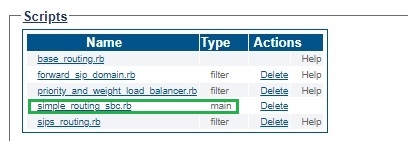
  • Include the filter script in the main script, default is simple_routing_sbc.rb.

Note: Only one "main" script should show the set of the Scripts:

Gateway->Routes->Routing Script->Edit the main script:

  • Note: if label routing or other before_filter script are used, please place ClearIP_query last

2KB
Open

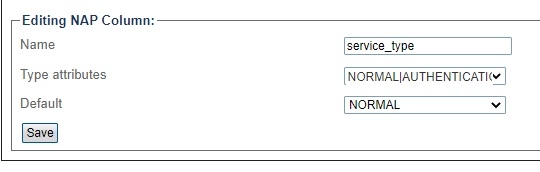
Add service_type in NAPs Column

  • Set the value to "AUTHENTICATION" for CLEARIP NAPs

Scenario 1:One ClearIP NAP

Follow the procedures in this scenario of you will only have one ClearIP NAP and do not need to differentiate between inbound and outbound calls.

Create Transport Server for ClearIP NAP

Create ClearIP NAP

Set service_type to "AUTHENTICATION" for NAP_CLEARIP

Add Route to NAP_CLEARIP

Scenario 2: More than one ClearIP NAP

Follow the procedures in this scenario if you have more than one ClearIP NAP and must differentiate between inbound and outbound calls.

Create 2 TCP transport servers: one for inbound and one for outbound

Create Inbound ClearIP NAP and Outbound ClearIP NAP

Set service_type to "AUTHENTICATION" for NAP_CLEARIP_IN and NAP_CLEARIP_OUT

Add Routes to NAP_CLEARIP_IN and NAP_CLEARIP_OUT

Final Common Procedures

Follow these procedures to wrap up the ProSBC configuration work. They apply to both previously described scenarios.

Configure other Routes

You need to configure other routes after the ClearIP routes if you want ProSBC to perform route advances upon receiving 503 or 302.

Route retry action of 3xx, 404 and 603 must be configured to allow ProSBC to perform failover, fraud control and SHAKEN AS/VS request.

Note:

  • The default route retry action of 404 is Stop call.

  • The default route retry action of 603 is Continue call.

Last updated

Was this helpful?